
Image: Alina Lückemann, Lower Saxony Chamber of Agriculture
Trees for outdoor runs for laying hens
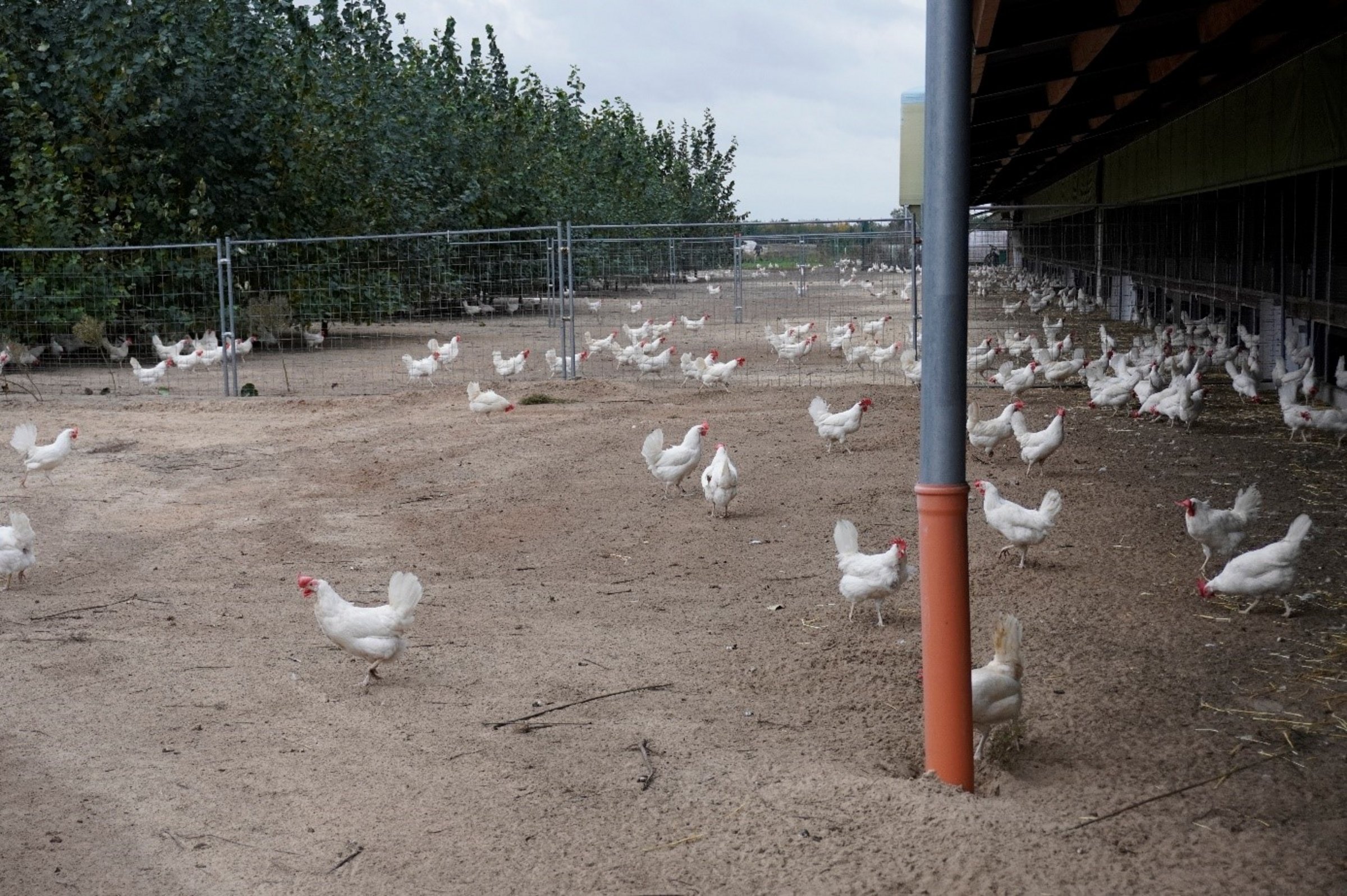
During an excursion organised by the “Netzwerk Fokus Tierwohl” project in October, the focus was on the design of outdoor runs for laying hens. The Engling farm in Geeste (Emsland) provided an insight into its organic laying hen farming operations.
In 2018/19, the family built a new aviary house for 15,000 laying hens. It was decided, in collaboration with the company Wald21, to plant part of the outdoor run with poplars. The advantage of this system is that the laying hens make better use of the outdoor run thanks to the shelter provided by the trees. “As soon as the hatches open in the morning, almost all the hens rush out into the outdoor run. In the safe thicket of poplars, you can always see birds taking dust baths and resting. In the evening, the hens return to the house of their own accord and there are no problems with birds remaining in the trees,” explains Michael Engling. Another positive aspect is that, at the time of the visit, no signs of feather pecking or cannibalism could be observed. The flock was in its 58th week of life and appeared calm and composed.
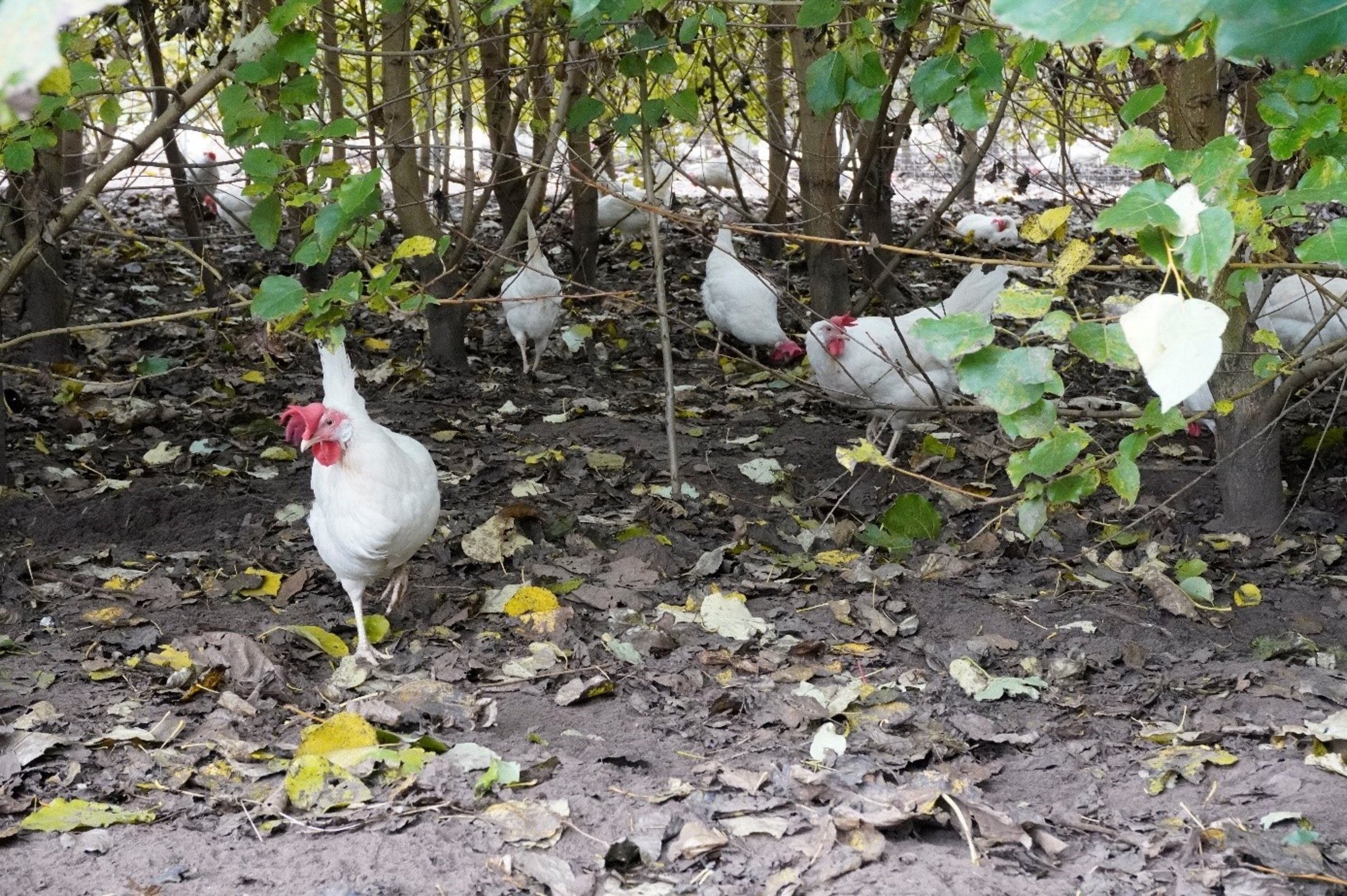
Planting the poplars
Mr Kudlich from Wald21 explained that the trees are best planted in spring (late April) using cost-effective cuttings. The cuttings are shoots cut from the nursery’s plantation, without any root system. Cuttings 40 cm long can be used for planting. However, in the area close to the barn, up to approx. 50 m around the barn, cuttings approx. 80 cm long should be used for planting. Here, the cuttings should be larger so that they are not pecked to pieces by the chickens.
To ensure successful planting, Michael Engling pointed out that the planting bed should be well prepared. The existing grassland should be thoroughly chopped up and turned over before planting to minimise competition for water. At the Engling farm, this was done using a plough furrow. Weeds should also not be overlooked at the outset. During the initial growth phase, weed control must be carried out mechanically. At the Engling farm, this was done by hand between the trees in a row, whilst between the rows of trees (spaced 2m apart) it could be done mechanically. In total, weeds were controlled in eight intervals; after the final treatment, the area between the rows was tilled and then rye was sown to suppress weeds. In the year of planting, 2019, there were also long dry spells in spring and summer, making irrigation a major challenge, recalls the farm manager. Some of the poplars dried out and therefore had to be replanted.
Arrangement of the trees
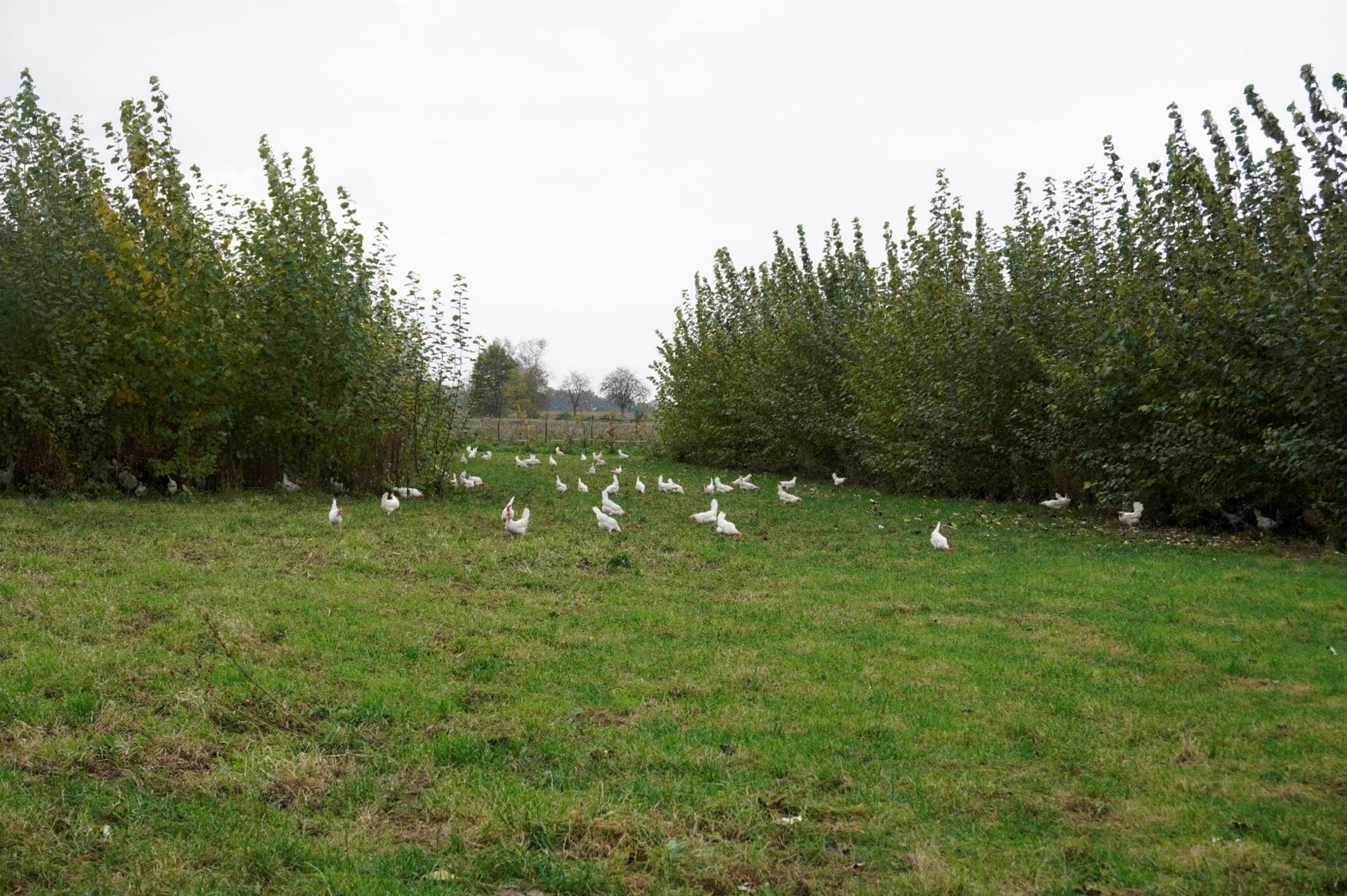
The trees were planted in blocks of six rows, aligned with the barn, with a 2-metre gap left between the rows of trees within each block. Generally, the rows of trees begin at a distance of around twelve metres from the barn. This distance is primarily to allow access for the tractor. Gaps were also left between the groups of trees to enable soil cultivation work to be carried out with the tractor.
Furthermore, regarding the Engling family’s outdoor run, it should be noted that each hen has 5 m² of space available in the run, rather than the 4 m² prescribed for organic farming. This gives the farm some leeway should certain areas of the run need to be temporarily cordoned off. Due to this additional space, the longest row of trees extends for approximately 190 m right into the corners of the run. Chickens can still be found even at this considerable distance from the barn.
Tree maintenance
The trees only need pruning after a few years. When pruning, the trees should be cut back as low as possible so that they sprout well again. If the pruned trees cannot be cordoned off from the hens, they should be cut back to a height of 0.5 to 1 m. This ensures that the new shoots on the poplars are not damaged directly by the hens.
Huts as shelters
There are no huts serving as shelters in the outdoor enclosure. Here, the trees provide sufficient cover. However, it should be noted that trees that are too small or have been pruned do not count as cover. Accordingly, trees should not all be pruned at the same time, but one after the other, with sufficient time in between to allow for regrowth. If the trees have only just been planted and are still very small, they do not yet provide adequate cover and additional shelters must be provided.
Predators
To deter birds of prey, a few cocks are kept in the flock. However, this deterrent strategy does not work as well as intended. Whilst losses due to birds of prey are minimal, the trees provide good cover for foxes. Losses during the first round were very low at 3%. Although the existing fence is sunk about 30 to 40 cm into the ground and grilles have been installed to prevent burrowing, this provides only limited protection against foxes. Plans are in place to secure the outdoor enclosure with an electric fence in future, so that foxes can no longer climb over the fence.
Legal hurdles
One drawback to using poplars is the legal framework, as the land must not be used for dual purposes. Consequently, the wood chips or logs later harvested from the poplars must not be sold for profit. However, it is possible to use the wood on one’s own farm, for example by spreading the wood chips as bedding in the area of the outdoor run close to the barn. The same applies if fruit trees are planted in the outdoor run. In this case, the fruit may not be marketed in any form.
Conclusion
Designing outdoor runs with trees is a good alternative to shelters for improving the laying hens’ use of the space. However, the legal situation is unsatisfactory, as CAP funding does not apply to the planted area and the marketing of the trees is also not permitted.
Author: Regine Revermann, Lower Saxony Chamber of Agriculture