

Piglet rearing, market situation and extensive exchange within the network
Network meeting of the Schwein impulse companies in North Rhine-Westphalia
At the first face-to-face meeting of the Impulsbetriebe this year, we met near Attendorn in the Sauerland region. Nine managers from Impulsbetriebe were present. Also in attendance were two representatives from the Federal Office for Agriculture and Food (BLE), two animal welfare multipliers (from the North Rhine-Westphalia Chamber of Agriculture) and a representative from the office of the Animal Welfare Competence Centre for Pigs and network supervisors from FiBL.
The programme began with a presentation by Dr Wilhelm Jaeger, who heads the agriculture department at Tönnies. In his perspective on pig farming in Germany, it became clear that meat consumption in Germany is declining noticeably and that the marketing of products from husbandry levels 3 and 4 in food retail is proving particularly difficult. The focus then shifted to internal exchange and networking among the pilot farms. As usual, all farm managers presented their farms with the aid of photos and reported on planned and completed conversion measures. The group's extensive expertise led to lively question and answer sessions and detailed discussions that continued late into the evening.
In between, Sandra Terletzki presented the work of the Animal Welfare Competence Centre for Pigs and the working groups that deal with individual aspects of pig farming, including the pen structure working group, the tail docking working group and the suckling piglet losses working group.
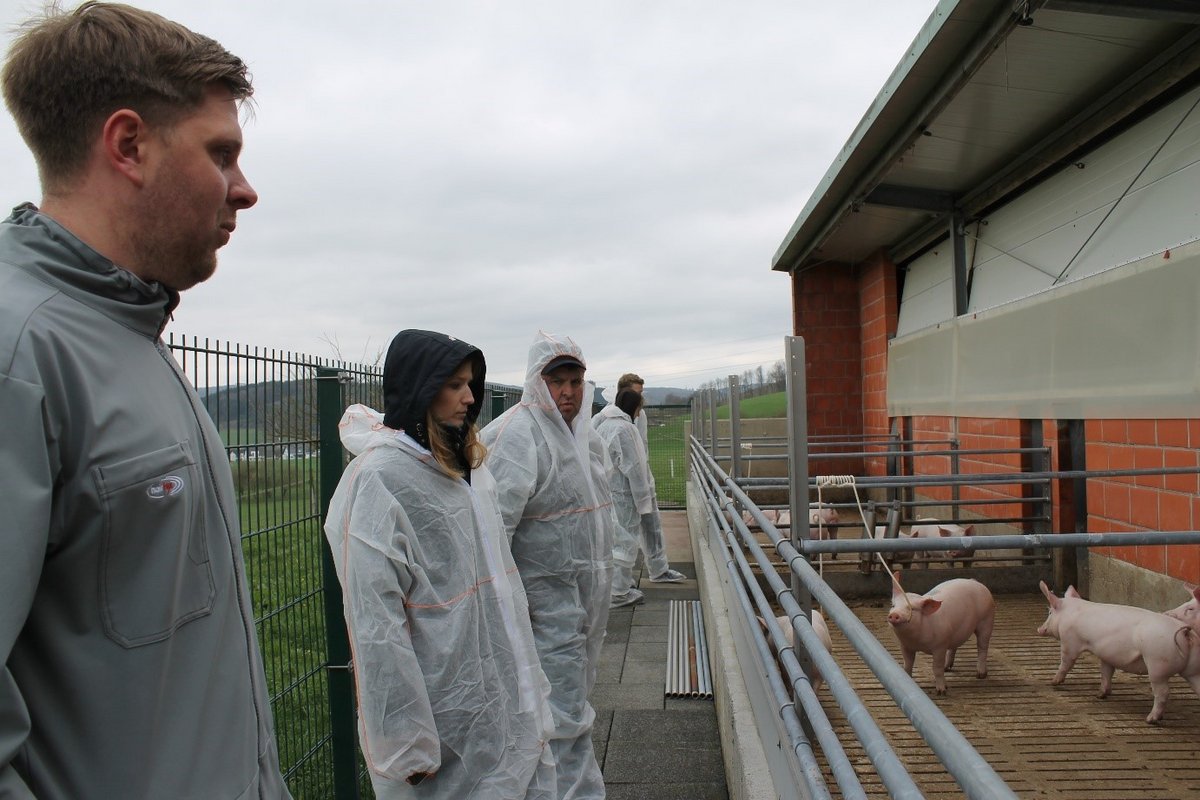
The second day featured two farm visits. Josef Mertens from the Schnieders-Hof demonstration farm invited visitors to tour his fattening barn with outdoor access and organic enrichment materials. Mertens provides his animals with generous space (1.5 m²) and plenty of fresh air in the outdoor area. He also raises some of the piglets himself and does not tail dock. Thanks to good management, tail biting has not been a significant problem so far.
The group also visited the Kampmann farm in Finnentrop, which keeps sows and supplies piglets to Josef Mertens. Kampmann is also working on future-oriented pig farming that focuses on animal welfare. This includes freedom of movement for sows during the suckling phase and large group housing in the waiting barn.
The entire meeting was dedicated to networking between the pilot farms. The good discussions and intensive exchange enriched the event and led to thoroughly positive feedback from the participants.
Author: Constantin Haupt, FibL Deutschland e.V.