
Animal welfare-oriented husbandry approaches in old buildings and the state animal husbandry labelling law
On 22 and 23 October 2024, the pig farms participating in the Focus on Animal Welfare network came together for another face-to-face meeting in Naumburg. Around 20 managers from the pilot farms, three representatives from the Animal Welfare Competence Centre for Pigs, and animal welfare multipliers from Saxony-Anhalt and Thuringia used the event to engage in intensive exchange and discuss current challenges in pig farming.
After a welcome by Constantin Haupt from FiBL Germany, the first day began with a presentation of the current tasks and activities of the animal welfare multipliers (Sophie Ziegler from Thuringia and Jana Zibolka from Saxony-Anhalt) and the office of the Animal Welfare Competence Centre for Pigs (Dr Maren Gerlach and Ulrich Hartmann, North Rhine-Westphalia Chamber of Agriculture).
They provided insights into their work and showed how they support farms in matters of animal welfare. Their practical approaches and experiences stimulated the participants to engage in technical discussions. In addition, the various working groups were presented, which, under the leadership of the office, deal with specific aspects of pig farming, such as emission control, tail docking, or housing systems.
These presentations were followed by the popular farm update, in which the managers of the pilot farms presented their farms and reported on planned and implemented measures to improve animal welfare. Photos and practical reports illustrated the progress made and stimulated lively discussions.
Another highlight was the presentation by Prof. Dr. Isabel Hennig-Pauka from the University of Veterinary Medicine Hannover, who spoke about joint mycoplasma in pigs and explained its prevention and treatment. Her findings led to numerous questions and provided valuable insights for practical application.
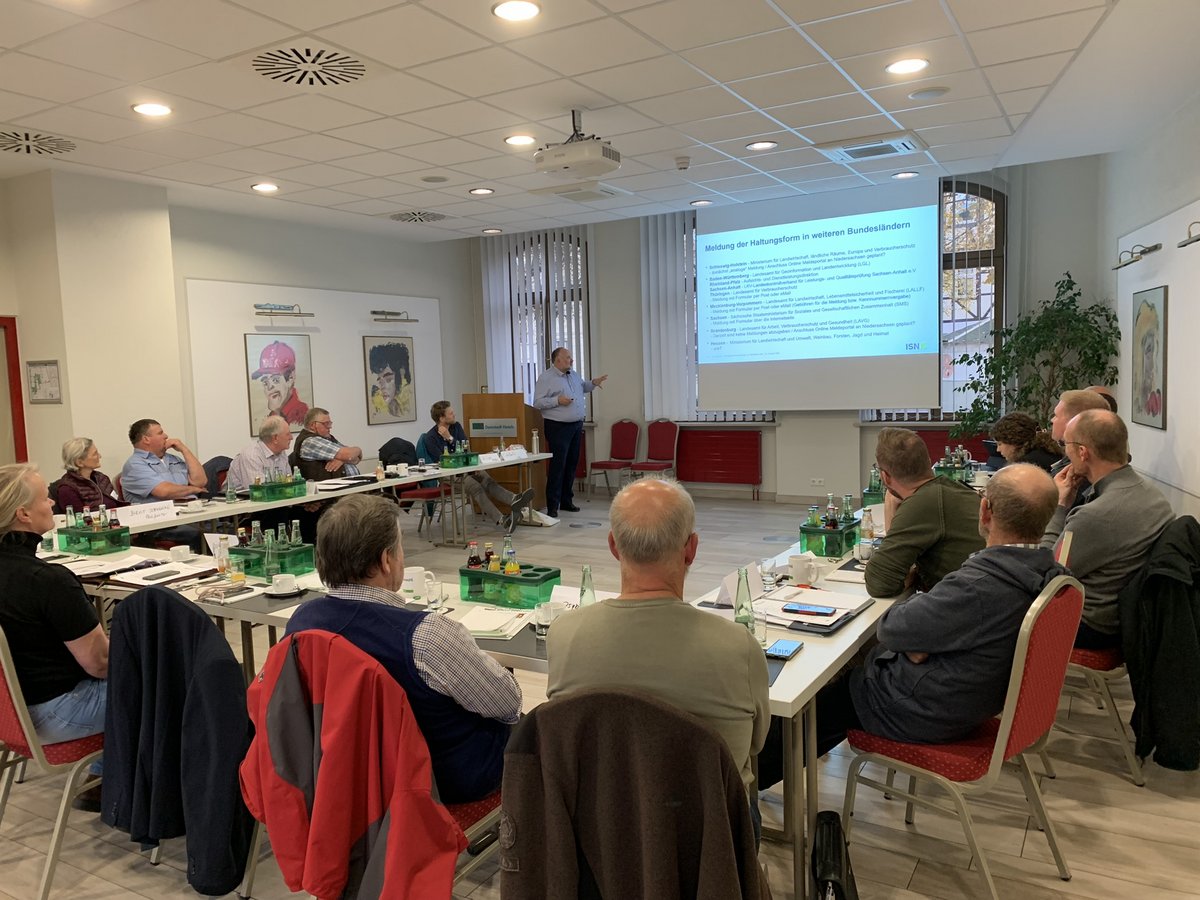
Dr Karl-Heinz Tölle from ISN Projekte GmbH concluded the technical programme of the first day with an introduction to the new state animal husbandry labelling law. His remarks on the implementation of the law were followed by an intensive discussion and continued to attract interest during the joint dinner.
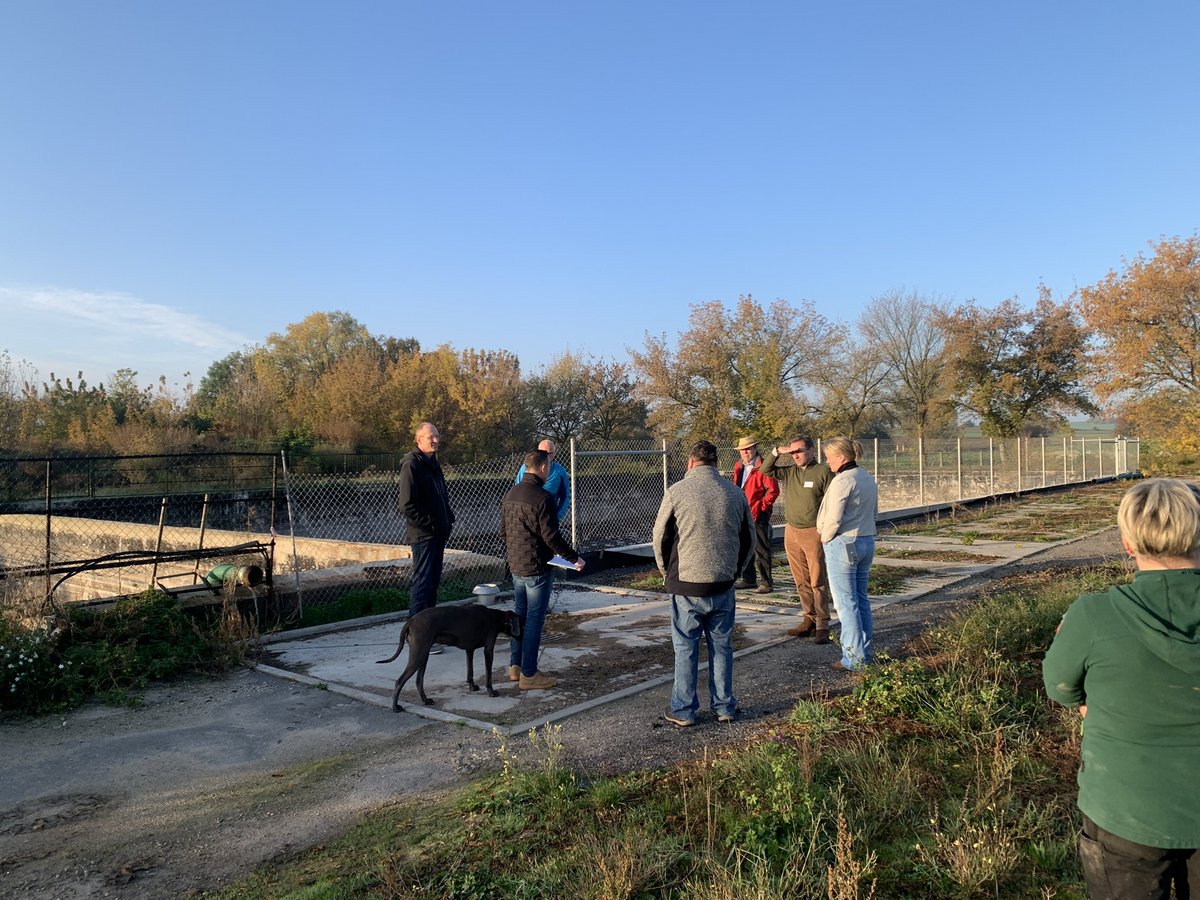
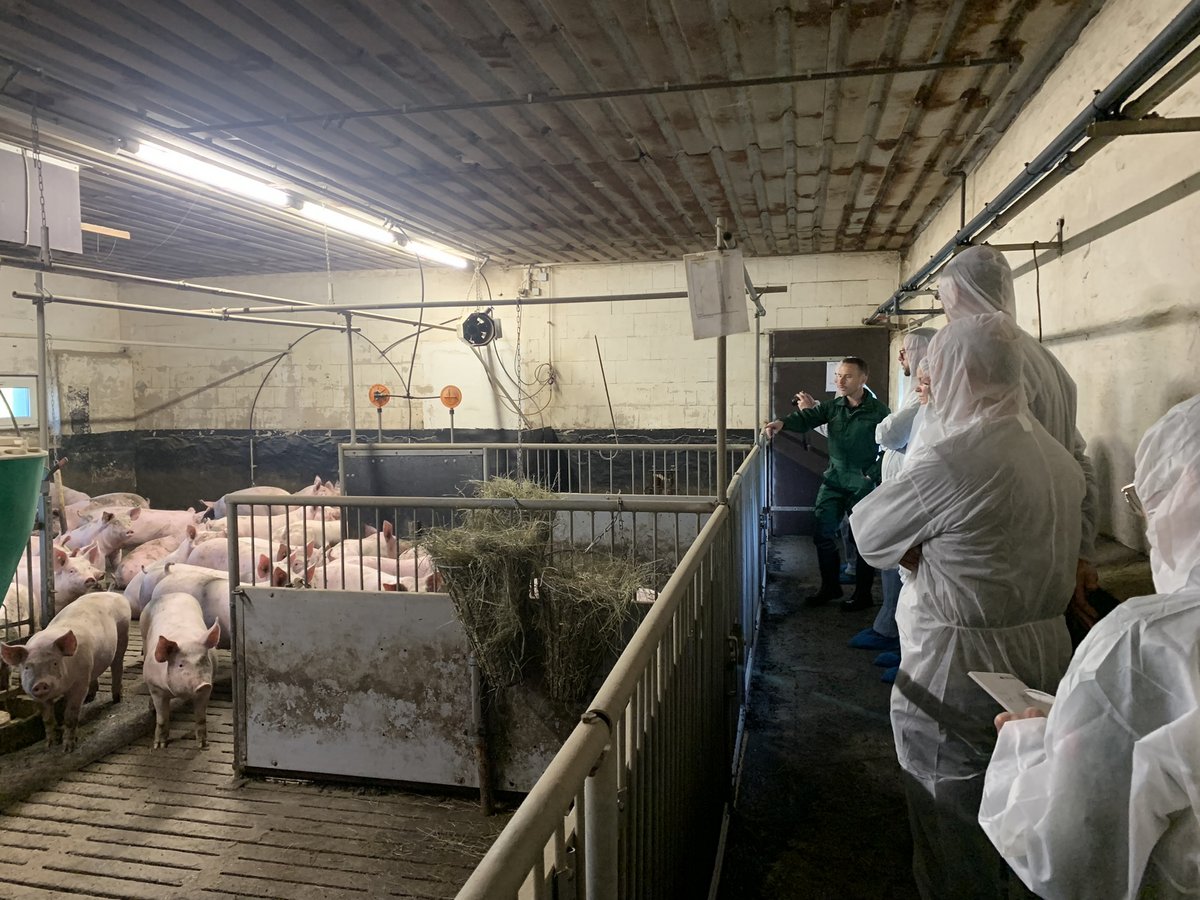
On the second day, two farm visits were on the agenda. One group visited the Pfiffelbach agricultural company, a farm with 800 sows and 5,000 piglet rearing places. The other group visited AGRIDIENST Prießnitz GmbH, which has 2,800 fattening places, where Dr Patrick Zier gave the participants a tour of the pig farm. Both farms place particular emphasis on animal welfare-oriented husbandry approaches, especially against the backdrop of further developing animal husbandry in old buildings. More space and a variety of activities offer the animals more freedom of movement and promote their well-being. These insights into different animal-friendly husbandry approaches enabled the participants to engage in a valuable exchange about individual operational solutions. The general dimensions of the two agricultural businesses, which emerged from LPGs in the GDR, also provided a topic of discussion between the managers of the impulse businesses.
The event concluded with a joint lunch, during which plans for future network meetings and thematic priorities were discussed. The feedback from participants was consistently positive: the intensive exchange and practical insights contributed to a successful network meeting and underlined the role of the pilot farms as a platform for the further development of pig farming with a focus on animal welfare.
Author: Paulina Kluger, FiBL Deutschland e.V.