
Mobile poultry slaughtering
Network meeting of leading poultry businesses in Lower Saxony
The poultry impulse farms met for their first in-person network meeting of the second funding phase. This time, eight farm managers from the poultry network travelled to the Diepholz region in Lower Saxony. Iris Flentje had agreed to present her mobile slaughtering facility and her farm to the group of impulse farms.
In order to address the heterogeneity of the poultry network, the decision was made to focus on the cross-species topic of mobile poultry slaughter. The pioneering farms present demonstrated the diversity of the poultry network. The animal species represented at the network meeting were broilers, geese and laying hens. As this was the first in-person network meeting in the second funding phase, Dr Isa Kernberger-Fischer presented the latest news from the Poultry Office.
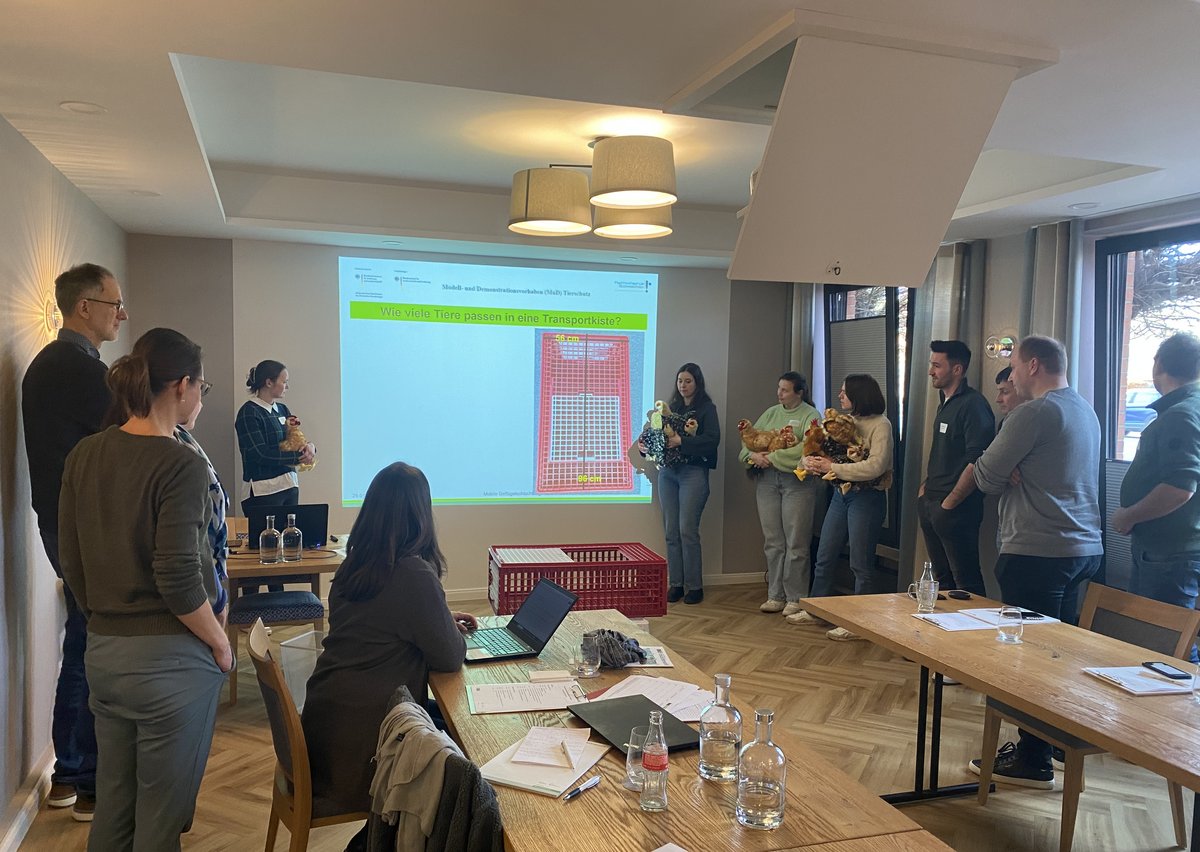
As an introduction to the topic of mobile poultry slaughter, Rebecca Menten from Soest University of Applied Sciences presented the GeSchMo project "Promoting animal welfare in mobile poultry slaughter". GeSchMo is a MUD project and has the task of preparing practice-oriented knowledge and passing it on to practitioners. The aim of the project is to draw up measures and guidelines for improving animal welfare in mobile poultry slaughtering. The GeSchMo project is based primarily in western and southern Germany, where it works with practical operations. Each operation was accompanied by the project during a certain number of slaughters, and data was collected from various areas. These include, among other things, the catching of the animals, waiting areas 1 and 2, and the cooling and storage of the carcasses. As a practical exercise, Ms Menten invited all participants to join her in examining the common models of transport crates and testing them for practical suitability. During the collegial exchange in the evening, the topics of the farm managers and the project presented were discussed in depth.
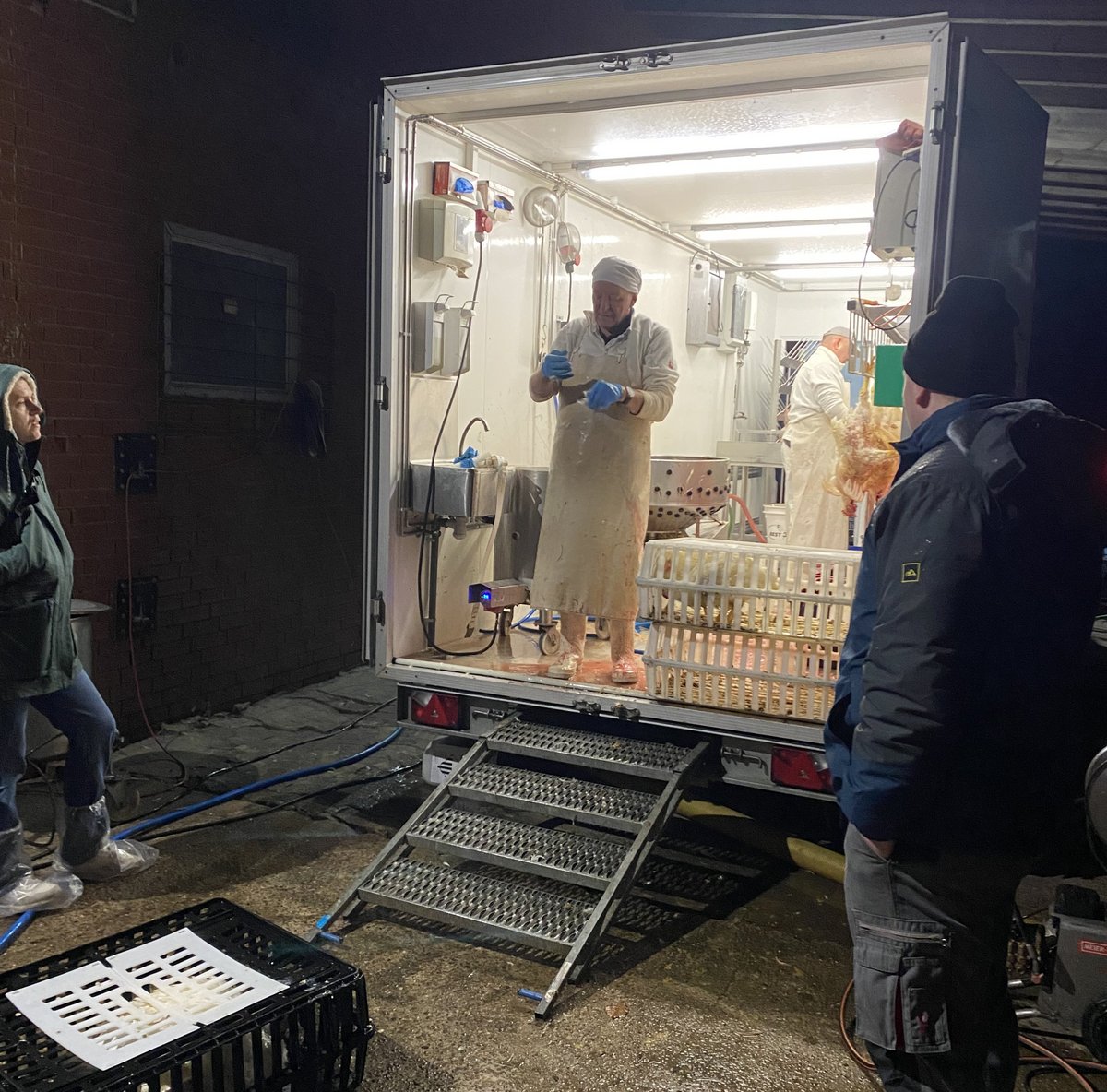
The second day of the network meeting began in the early morning darkness, as the group was invited to Iris Flentje's farm to visit the mobile poultry slaughter facility. In addition to the slaughtering process, the farm managers were also able to get an idea of the mobile rearing of broiler chickens in self-designed mobile houses. Here, too, the collegial exchange was used intensively. To conclude the meeting and for a late breakfast, the group met again at the hotel. There was another intensive discussion and the next network meetings and excursion were also discussed, as the group would like to continue the exchange with a high level of motivation and commitment.
Author: Gesa Krone, FiBL Deutschland e.V.