
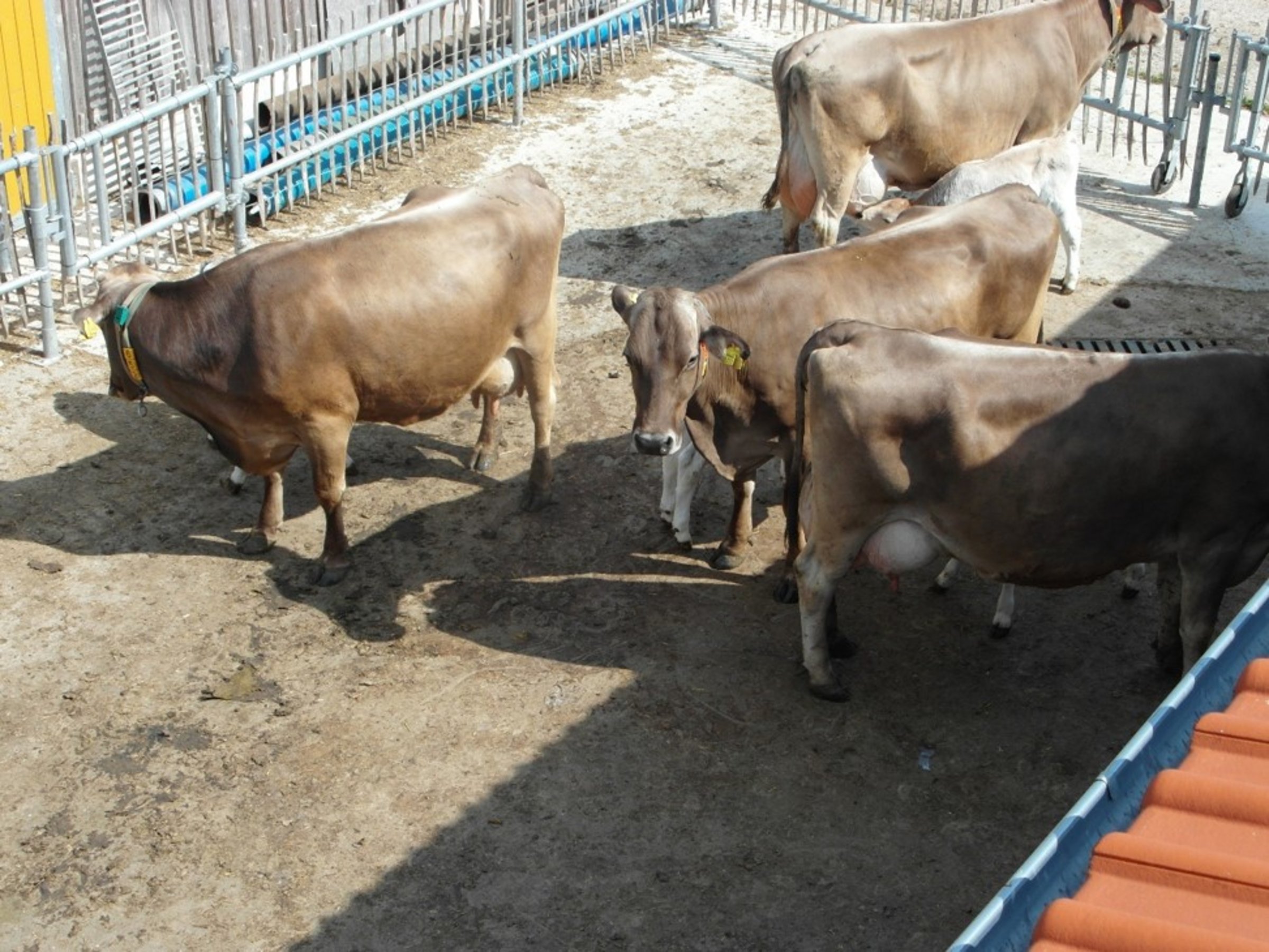
In dairy farming, separating cows and calves immediately after birth is standard practice and has been considered important for many years in order to ensure optimal care for the calves and protect them from health problems. In suckler cow farming, calves always stay with their mothers, where the close bond between the animals can be clearly observed. It is precisely this close bond that causes stress for both cow and calf when they are separated later on. Cows that are separated from their offspring a few days after birth are particularly vocal in expressing their displeasure. Their calls or active search for their calf in the barn make the stress of separation noticeable to outsiders. Calves that are housed separately also show less calm behaviour and call more frequently.
For several years now, various farms have been trying to establish "cow-bound rearing". This allows cows to have direct contact with their calves during the first weeks of life and to suckle them, even though they are being milked. The fact that this undertaking is not as easy as it seems was also made clear at a thematic network meeting on "cow-bound rearing" organised by the Impulsbetriebe Rind (Cattle Initiative).
Manfred Gabler from the Biohof Gabler (www.biohof-gabler.de) impulse farm told participants about his journey towards cow-bound rearing (mother- and nurse-bound). The farm began its first attempts at rearing calves with their mothers back in 2013. After comprehensive planning in collaboration with experts, a new calf barn for cow-bound rearing, a meeting area in the exercise yard and a group calving box were put into operation in 2018. The farm manager used numerous images to illustrate the development process towards cow-bound rearing with a view to work efficiency and quality of life for all involved.
Immediately after birth, the calves are given colostrum via a teat. "In my opinion, this is crucial for successful rearing," said Gabler, explaining why. "This ensures that the calves receive colostrum and, more importantly, that they have already had a teat in their mouths before they drink from the udder. This makes the transition to bucket feeding much easier later on." At the Gabler organic farm, the calves stay with their mothers in the calving box for the first three days after birth. After that, the calves spend around 12 hours a day with their mothers (mainly at night) until they are 7–10 days old, when they can then suckle from them. At the beginning of their second week of life, they are moved to the calf barn and have the opportunity to drink from the udder and spend time with their mothers twice a day for around half an hour before milking. This takes place in the meeting area, which also serves as an exercise yard. There, the behaviour of the animals is closely observed, especially in the case of cow-calf pairs that are new to the group or when switching to a foster mother. The work therefore shifts from physical labour to visual observation. The farm manager pointed out that everyone on the farm who is responsible for the cows and calves must be committed to this approach.
The male calves are sold at four to five weeks of age. Before that, they are placed in the so-called "separation box", which is located in the cowshed near the milking parlour. A few days before the sale, they are stabled there and still have visual and physical contact with their mothers. It is important that they get used to the bucket immediately. In this context, the farm manager once again made it very clear: "The key to success and a quick transition to the feeding bucket is that the calves have been fed colostrum from the bucket, because they seem to remember this and then it almost always works immediately."
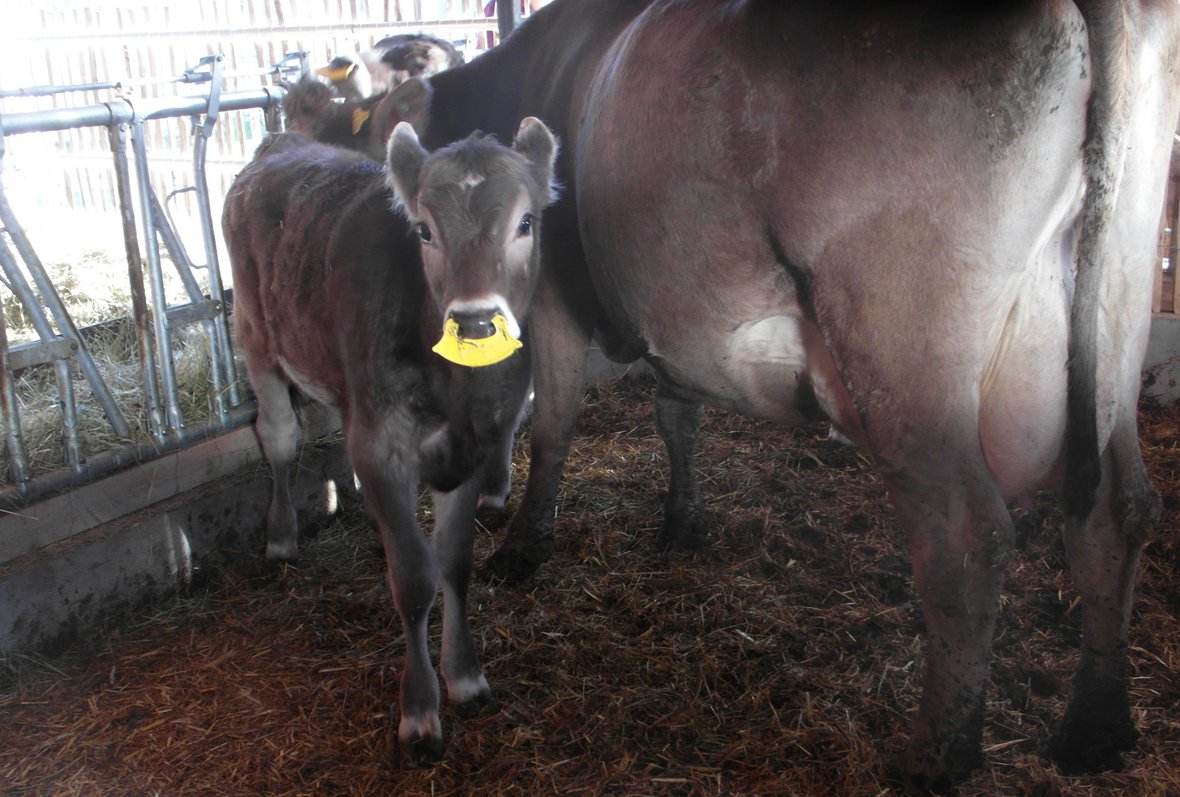
From the eighth week of life, female offspring are housed in a separate area with a large igloo in the cows' outdoor enclosure, where they are fed milk once a day by their own mother or a foster mother. The slow weaning from milk and the gradual reduction in contact with the mother or foster mother significantly reduces stress levels. The farm therefore ensures that these two things happen at different times. The calves are fitted with suckling prevention flaps, known as "nose flaps". These are plastic plates that are easily and painlessly secured in the nostrils with the aid of two flexible clips, preventing the calf from suckling on the udder because the flap covers the access to the teats. This allows the calf to continue to have direct physical contact with the cow, even though it no longer receives milk but only water and solid feed. The female calves are then placed in the separation box at around 13 weeks of age, so that the mothers or foster cows still have the opportunity to make contact with the calves, which usually diminishes significantly after a week.
His conclusion is that a well-thought-out housing concept reduces the amount of work required and that the nature of the work has changed from physical strain to more animal observation. However, he also makes it clear that a good separation concept at the end of the feeding phase is essential to ensure that everyone involved is satisfied. In response to questions, he added that in order to maintain udder health, he milks all cows, including those that are suckling, at least once a day in the milking parlour and immediately identifies any problems. The good udder health, with an average somatic cell count of approx. 70,000 – 80,000 in the herd average, proves him right. He also pointed out that for someone who tends to let things slide when there are no obvious problems, such seemingly more time-consuming routines are sometimes helpful in ensuring that nothing is overlooked. On the other hand, those who consistently check the udders every day immediately after suckling can do without such routines. He made it clear that there must be farm-specific approaches here. When asked about calf health, the farm manager quickly made it clear that treating calves raised with their mothers is much more challenging than treating those fed with buckets. In his experience, only very close observation can enable early intervention, e.g. in the case of diarrhoea. However, he also emphasised that calf health on the farm is very good when there are enough calving boxes available and good hygiene in the box. If there were calves with diarrhoea, it was usually when the calves were brought into the calf group too early, i.e. before the 7th day of life. "It has been shown that the system only runs smoothly once all aspects have been gradually implemented." Gabler thus emphasises that it was also a learning process for him to get used to cow-based rearing. "There is no standard system for cow-based rearing, but there are many ideas and guidelines on what needs to be taken into account," he finally pointed out.
Author: Dr Gudrun Plesch, FiBL Deutschland e.V.