
Image: Andreas Pelzer, North Rhine-Westphalia Chamber of Agriculture
Impulse farms discuss "Overall farm management concepts for dairy cattle"
What could an innovative dairy cattle husbandry concept look like if animal welfare, ecology and economics were taken into account? This question was posed by numerous experts from all federal states as part of the "Overall Dairy Cattle Husbandry Concepts" project. In an online event, Dr Ilka Steinhöfel, representing the expert group, presented the latest project results to the pilot farms.
The first results from the three working groups on "Overall Farming Concepts" for cattle, pigs and poultry were presented at an event at Haus Düsse (LWK NRW) at the beginning of October 2021. Now, the pilot farms for animal welfare in cattle farming were to be given the opportunity to have the concept for dairy cattle explained to them.
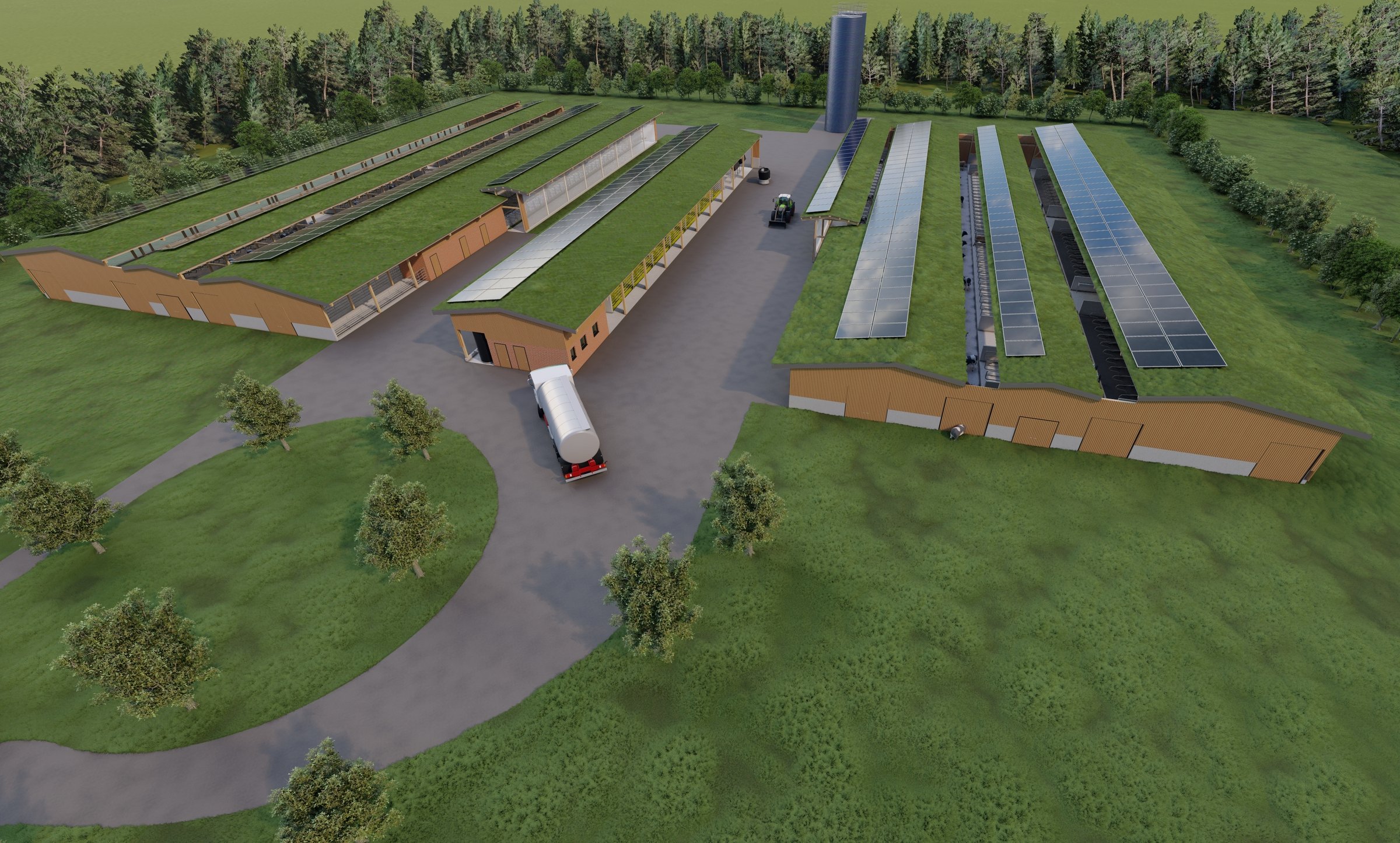
The speaker reported on the project meetings and an excursion that had been carried out, during which ideas were collected and classified. She explained how the planning then proceeded. The experts divided themselves into three groups during the course of the project. The first group focused on planning a barn that specifically addresses animal welfare. The aim was to think from the cow's perspective and design the housing environment for the animals without taking ecological or economic concerns into account. The second group designed a barn that is optimal from a cost and labour management perspective, without neglecting the current recommendations from livestock consultants. The third group focused on ecology and planned a resource-saving barn that could be operated as energy-efficiently and climate-friendly as possible. The results from the three groups were then combined into a "compromise barn". The barn plans with the accompanying 3D images were presented to the pilot farms by the speaker.
In the subsequent discussion, there were numerous questions about the design and the possibilities for practical implementation on dairy farms. Critical questions were raised as to whether, for example, the rearing of calves with their mothers or cows should not have been taken into account in the animal welfare barn. With regard to cow comfort, there was an intensive exchange on composting barns, and the implementation of systems for separating faeces and urine to reduce emissions was also discussed.
The pilot farms participated actively in the event and showed great interest in the publication of the results, which is still pending. The Animal Welfare Focus Network will report on the results for all three animal species in due course.
Author: Gudrun Plesch, FiBL Deutschland e.V.