
(© Netzwerk Fokus Tierwohl, FiBL Deutschland e.V.)

Feeding laying hens with extended service life
Network meeting of leading poultry businesses in Lower Saxony
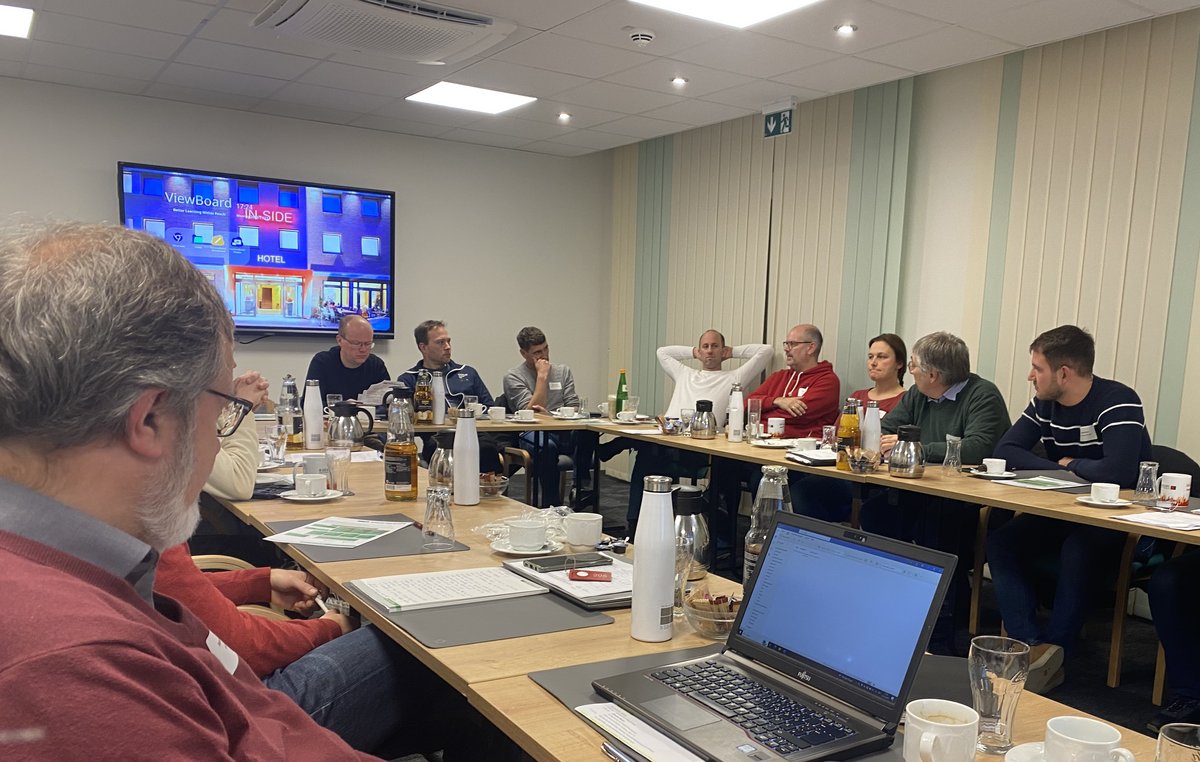
In November 2023, the poultry impulse companies met for a final face-to-face network meeting. This time, ten farm managers from the poultry network travelled to the Lower Saxony-Dutch border, to Nordhorn/Wilsum in the county of Bad Bentheim. Ingo Mardink had agreed to give a tour of the farm. The county of Bad Bentheim is also one of the regions with the highest density of laying hens in Germany.
At the last network meeting in April, the group of impulse farms agreed on the topic of feeding. We were pleased to welcome Robert Pottgüter as a speaker for the desired topic. His specialist lecture was on "Feeding laying hens with extended service life and adapting feeding to current genetics". This is a very exciting and extremely topical subject in view of the current situation in laying hen farming. The exciting lecture was followed by an equally exciting, detailed and interesting discussion, which went far beyond the time allocated for the lecture and was continued the next day. The work of the Poultry Office from the project was also presented. Dr Katja Kulke gave an overview of the topics and materials published by the Poultry Office during the first project period. She also discussed the poultry species that the office deals with in addition to laying hen farming. These include the rearing of pullets and the farming of turkeys and waterfowl. During the collegial exchange in the evening, the topics were discussed in depth once again by the farm managers.
The second day was opened by Fabian Rose, successor to the Rose farm, with a presentation of his bachelor's thesis on "Climate-friendly laying hen feeding". In his thesis, he dealt with a digital platform that calculates the ecological footprint of feed and proteins. For the practical part/farm tour, Ingo Mardink opened his farm to the group of impulse farms. As a former demonstration farm for animal welfare, he already has a wealth of experience in designing his laying hen house to promote animal welfare and showed the group his automatic enrichment system, which was installed on his farm as part of the Animal Welfare Competence Centre and is still in permanent use. The participants inspected the barn with great interest, observed the use of the enrichment system and exchanged ideas on the implementation of various measures at the individual farm level.
Planning for future network meetings and the participation of the pilot farms was also discussed, as the group is keen to continue the exchange with a high level of motivation and commitment.
Author: Gesa Krone, FiBL Deutschland e.V.