
Excursion of the cattle farms to Baden-Württemberg and Switzerland
The cattle farms participating in the Focus on Animal Welfare network met in mid-October in Baden-Württemberg and Switzerland to gather ideas for networking during a study trip.
On 14 October, everyone gathered at the start and end point of the excursion (Biohof Renz, impulse farm) in Baden-Württemberg to set off together by coach to the Sutterhof impulse farm in Hohentengen-Lienheim, a dairy farm with around 50 dairy cows and milking robots, which breeds for genetic hornlessness, engages in arable farming and, as a learning farm, is committed to a broad programme to strengthen the younger generations' connection to agriculture. Raised feeding areas, fans, an automatic feed pusher and a water sprinkler system on hot days ensure a high level of comfort for the cows. After also taking a look at the relatively new, small Wagyu herd, Anna and Franz Sutter provided Swiss raclette and a traditional Swiss potato dish called "Gschwellti" to get everyone in the mood for the coming days in eastern Switzerland.
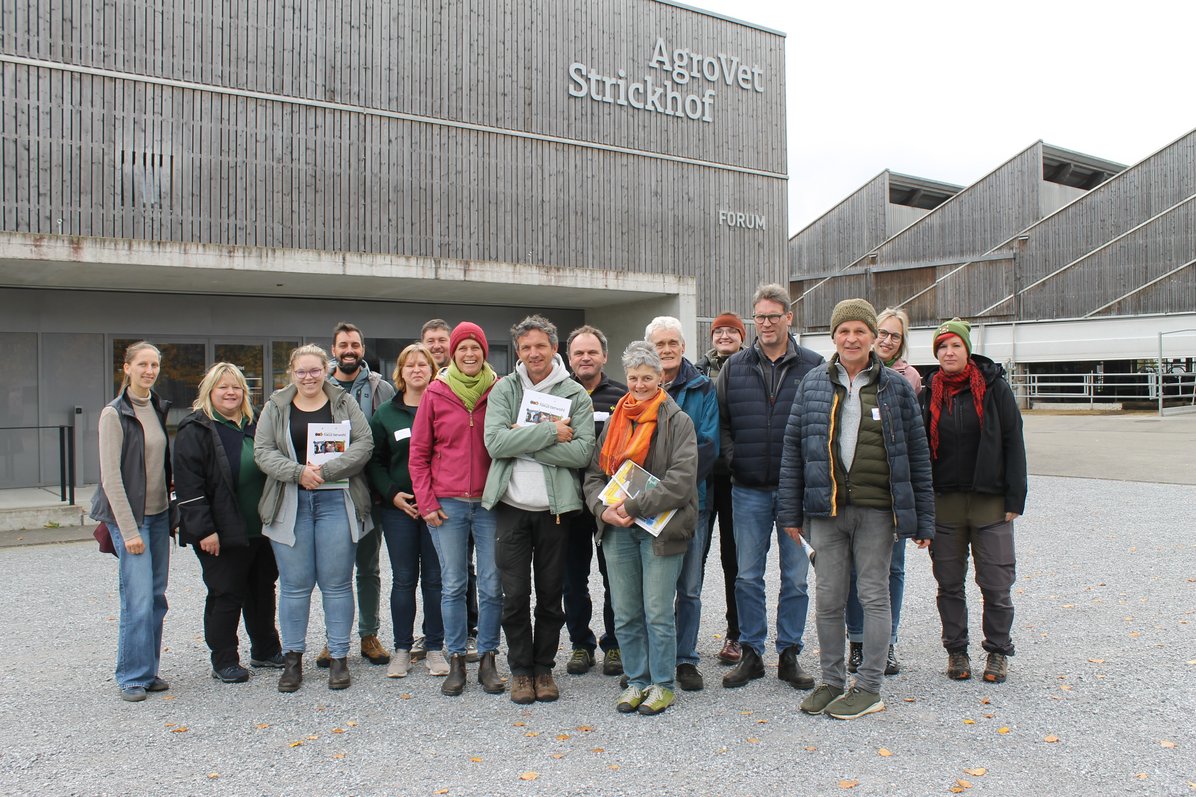
On 15 October, the group spent the morning at AgroVet Strickhof in Lindau, a large training and research facility that is part of the agricultural science and veterinary medicine programmes at ETH Zurich and the University of Zurich. Matthias Schick, Head of Animal Husbandry and Dairy Farming, presented the farm and gave a tour of the premises, where a member of staff provided detailed insights into calf management. The tour of the experimental stables, completed in 2017, with a focus on emission reduction and, as a highlight, the so-called "climate chambers" in which greenhouse gas emissions from cattle are measured, left a lasting impression on all the participants, as evidenced by the lively discussions during lunch...
In the afternoon, the programme included a visit to the Notkersegg farm in St. Gallen, where farm manager Petra Fäh gave a very open tour of the farm and reported on slaughtering at the livestock farm with associated direct marketing. The farm has two vending machines for various products (meat, cheese, apple juice, eggs, etc.) and also slaughters "on demand". This means that when enough customers have pre-ordered a meat package, a cow is slaughtered. The meat packages can then be picked up on a specific day. A small tasting of "Mostbröckli", a Swiss meat speciality, was provided after the tour. The group then had a little time for a walk, where they could admire the "OLMA" agriculture and food fair, which was taking place at the same time, at least from a distance.
On the morning of 16 October, the group was given a first-hand insight into production at Züger Frischkäse AG. Markus Züger personally welcomed the group to the premises of the affiliated shop and then presented the company's history and concept in the conference room. After changing clothes and passing through the hygiene lock, we toured the production facilities. For example, we were able to watch live how mozzarella and other dairy products are made from the delivered milk, how the products are packaged, and finally we were allowed to take a look at the impressive automatic high-bay warehouse. The tour concluded with a visit to the company's own workshop, which enables the dairy to customise the production machines and thus manufacture a wide variety of products on the same production line. A mozzarella tasting in the form of a topping on the starter salad during lunch rounded off the visit.
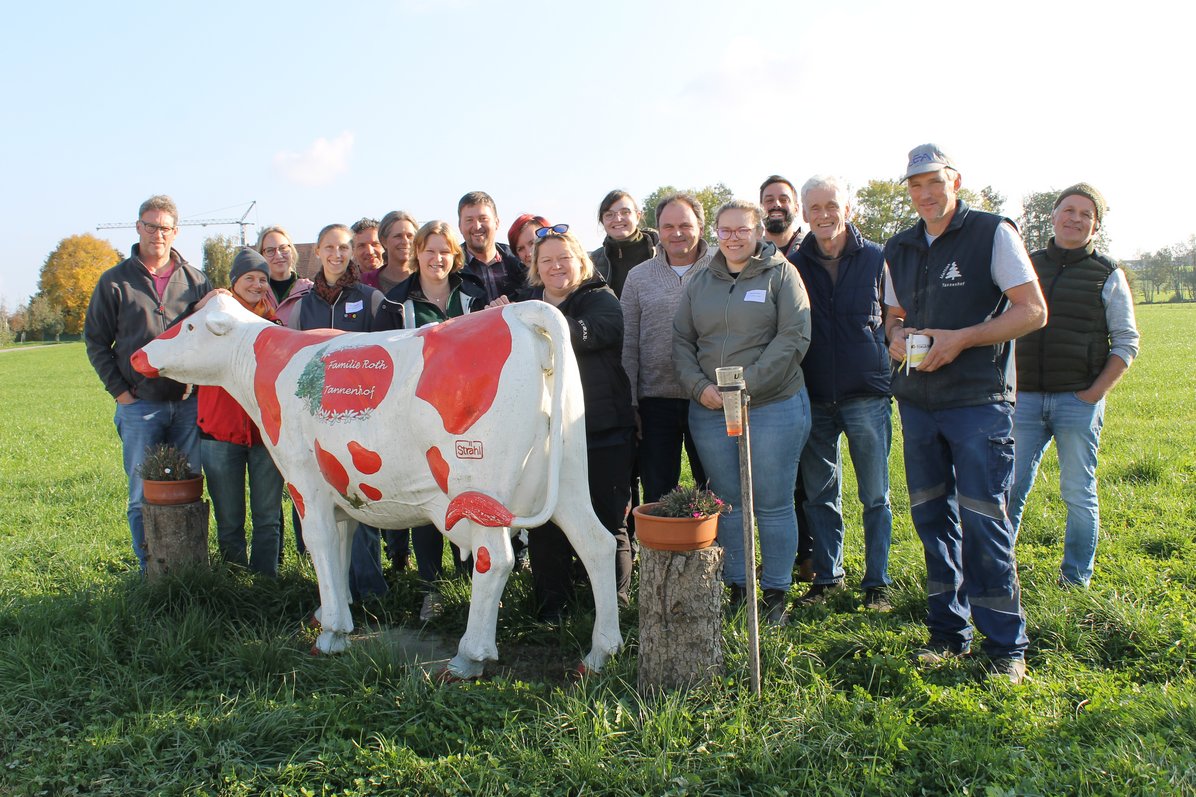
In the afternoon, the group visited Mathias Roth's animal welfare barn near Kesswil. With a view of Lake Constance, the farm manager welcomed the group. Although there are 200 dairy cows on the farm, fruit orchards are also cultivated in addition to arable farming. The tour started in the calf barns, which led to plenty of questions, as the farm had spent a long time working on a good concept. The dairy barn has six rows of cubicles with external feeding tables, wide walkways with raised feeding areas, feeding area partitions, milking robots and an automatic straw pellet bedding system. If it gets too hot in the light and air-filled barn in summer, hose ventilation provides cooling. The management of the herd was discussed animatedly with the farm manager and new ideas were taken on board. The farm manager was open and honest, both about the positive developments on his own farm and the challenges he faced. With many impressions in their luggage, the group then set off on their return journey to Germany.
The last item on the excursion programme took place on 17 October at the Biohof Renz farm. Here, the focus was on the structural development of the farm and the associated technical solutions, such as the combination of AMS and grazing with a central grazing selection gate, which allows the cows to go out to pasture after milking or when they are not yet due to be milked. The intensive, technical exchange also focused on feeding issues, sustainability topics and the topic of consumer communication. At the end of the excursion, there was a hearty lunch, during which the participants were able to review the experiences of the last few days and continue their discussions.
Conclusion
The excursion group was warmly welcomed at all the farms visited, and there were always numerous questions and lively discussions. The excursion offered interesting insights into different dairy farming, research and milk processing businesses. The discussions and professional exchange among the participants were particularly enriching. All the participants clearly looked forward to seeing the group again soon – a new date has already been set, once again in the familiar setting of a network meeting.
Author: Paulina Kluger, FiBl Deutschland e.V.